
# Liveness Analysis 活跃变量分析
判断在程序执行的某个点上,一个变量的值是否可能在未来被使用,是寄存器分配、死代码消除的基础
# Compiler Optimizations
- Local: 基于 basic blocks
- Intraprocedural (or “global’): 基本块的控制流转移
- Interprocedural (or “whole-program”): Operate on > 1 procedure, up to whole program; Sometimes, at link time (LTO, link time optimization)
两步:
- Analyze program to gather “facts”
- Apply transformation (e.g., optimizations)
# Dataflow Analysis
Control Flow Graph: A directed graph 数据流图
– Nodes represent statements
– Edges represent control flow
CFG 的简化:基本块
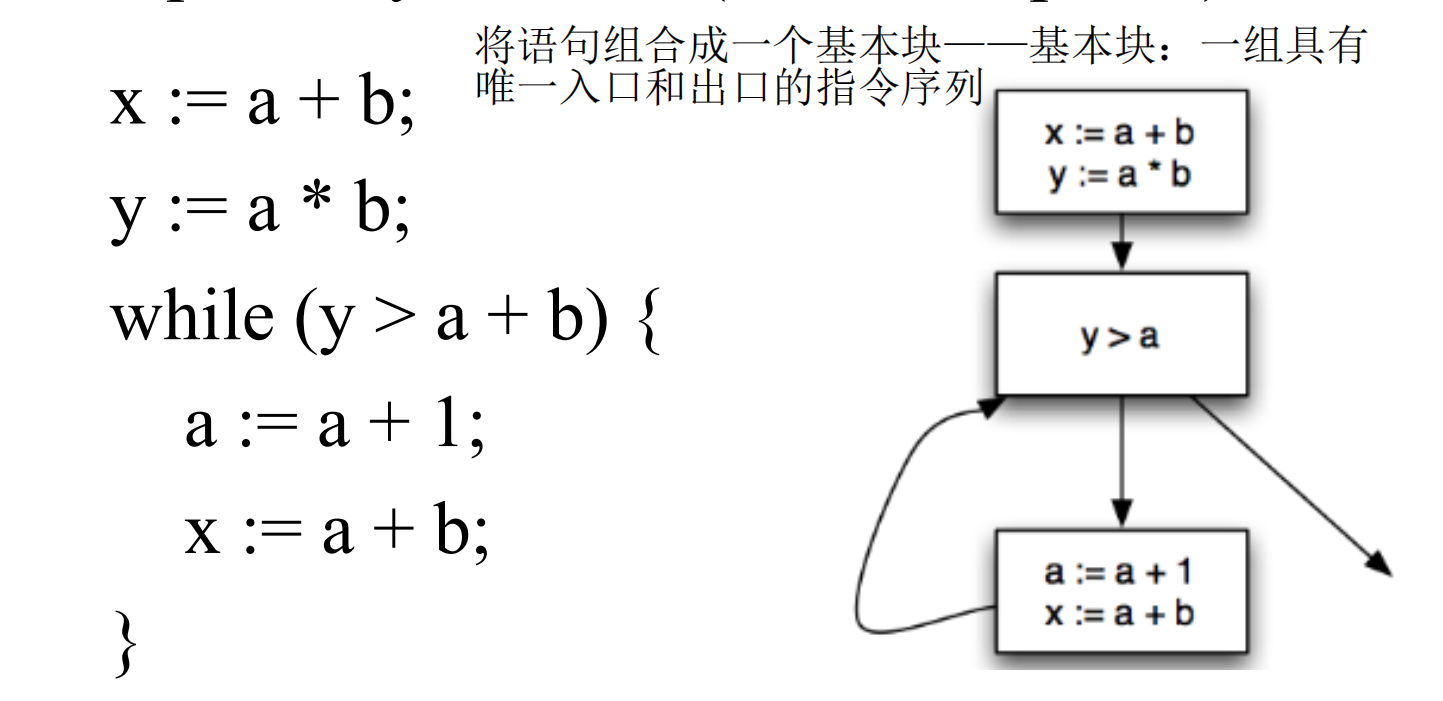
# 变量的活跃性:
变量 x 在语句 s 处(执行 s 之前)处于活动状态,当且仅当满足以下三个条件:
- 存在一个使用 x 的语句 s’;
- 存在从 s 到 s’的路径;
- 这条路径上没有对 x 进行任何赋值操作
通过分析 liveness,我们可以实现:
- Register Allocation
- Code Optimizations:Remove unused assignments
- IR Construction: Optimize the construction of SSA
- Security/Reliability: Detect the use of uninitialized variables
# Dataflow Equations for Liveness 构建数据流方程
A CFG node has
- out-edges: lead to successor nodes
- in-edges: come from predecessor nodes
- pred [n]: the predecessors of node n 前驱
- succ [n]: the successors of node n 后继
几个定义:
- use [n]: 在节点 n 被读取或使用 (x = a + b 的 a 和 b, if (a < b) 的 a 和 b, return c 的 c)
- def [n]: 在节点 n 被定义 (x = a + b 的 x)
- in [n]: 在节点 n 之前,所有活跃变量的集合
- out [n]: 在节点 n 之后,所有活跃变量的集合
三条活跃性规则:
- if then for \all m \in pred[n] we have
- if then
- if and then
得到以下两个数据流方程:
一个节点在 n 的出口处活跃当且仅当在它后继的入口处是活跃的(活跃性的反向传播)
# 求解数据流方程
有了上面的两个数据流方程,就可以求解数据流方程了
算法:
1 | for each n |
- 将所有节点的
in和out集合初始化为空集。 - 写出
use[n]和def[n] - 用数据流方程更新
in和out集合 - 直到
in和out集合不再改变为止
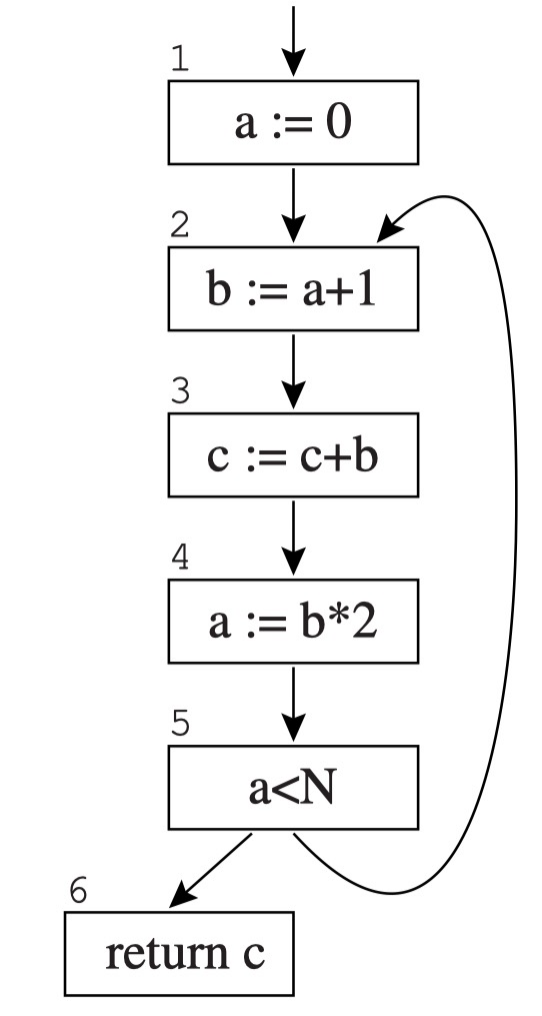
例:
![]()
对于这个 CFG
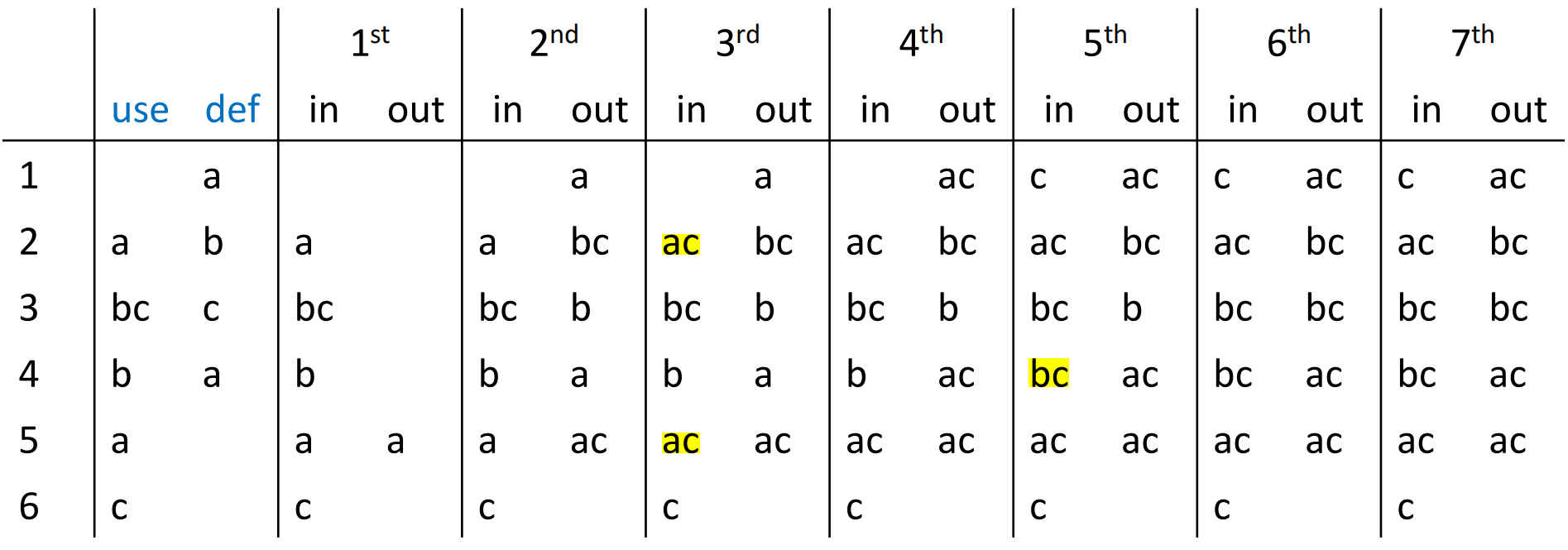
每一次迭代如图:
![]()
# Improvements
# Use Basic Block
后面有点懒得看,先放着
# 集合的表示方法
对于 in, out, use, def 集合的表示和操作对性能有很大影响
# Bit Arrays
有点像 bit map,适用于稠密集合(1 比较多的,如果 0 太多就浪费了)
# Sorted Lists
适合稀疏集合(用一个链表存集合中的变量,Sorted by variable name/ID)